


Made in Germany · ISO 27001 · GDPR-compliant
Data Lake in Corporate Learning—Leveraging Data to Strengthen Learning Strategies
Use Learning Data to Strengthen Your Learning Strategy
If you want to manage learning processes based on data, a centralized data strategy is essential. A data lake collects learning data from LMSs, HR systems, feedback tools, and other sources in one place—both structured and unstructured. This lays the foundation for robust learning analytics and a learning strategy guided by measurable results.
Data lakes store data in its raw form, enabling flexible analysis—from simple course completion reports to AI-powered learning path recommendations. The quality of the data sources and their integration into the existing learning infrastructure are critical.
Learning data all in one place
Data Quality
Learning Infrastructure


Implications for LnD & Academies
The Role of Data Lakes in Corporate Learning
A data lake is a central storage platform for structured and unstructured data from various sources. In corporate learning, it collects data from the LMS, HR system, feedback tools, learning portals, and external systems—in their native format, without prior structuring.
Unlike traditional databases or data warehouses, data in a data lake is not transformed during collection, but rather during analysis. This allows new questions to be asked later on without having to restructure the data architecture.
✓
Centralized data storage: A single point of access for all data simplifies analysis and reporting.
✓
Collecting unstructured data: Emails, chat histories, and social media interactions also provide insights into learning behavior.
✓
Flexibility in Analysis: Support for a wide variety of analysis tools—from simple queries to machine learning.

To be clarified in advance
Questions Regarding the Integration of Data Lakes
Before implementation, there are specific decisions that L&D leaders and IT should clarify together:
• Which data sources are relevant? A clear overview helps avoid redundant data and optimize the integration strategy.
• What are the goals of the implementation? What problems need to be solved—such as data silos or a lack of access to learning analytics?
• How will learning and performance data be linked? Understanding how data sets correlate and which KPIs are relevant for learning assessment.
Cross-organizational Analysis
Benefits of Data Lakes for Corporate Learning
Scalability
Easily scalable to keep pace with business growth and additional data sources.
Advanced analytical skills
AI and machine learning provide deeper insights into learning behaviors and trends.
Centralized Data Management:
All learning and performance data is available in one place, reducing the time spent searching.

Challenges and Risks
Implementing a data lake is not purely an IT project. Those who invest solely in technology without also considering data strategy and governance risk ending up with a data pool that is difficult to use rather than actionable insights.
✓
Data Quality and Governance: Data quality standards and guidelines are essential for reliable analyses.
✓
Data Protection and Compliance: Applicable data protection laws must be followed, particularly with regard to personal data.
✓
Technical Complexity: Integrating data from different systems requires specialized expertise and resources.
Relevance
Which companies benefit from data lakes in corporate learning?
A data lake is not a one-size-fits-all tool. It is particularly valuable in situations where there are many heterogeneous data sources and where machine learning analyses are needed across system boundaries:
• Large companies with complex learning needs.
• Data-intensive industries such as financial services, technology, and healthcare.
• Organizations with multiple systems (LMS, HR, other platforms) that benefit from a consolidated view of learning and performance data.
Highlights
The Role of an LMS in Integrating a Data Lake
The LMS is the primary data source for every data lake in corporate learning. It provides structured training data that only realizes its full analytical potential when combined with HR and performance data.
SoftDeCC supports data provision for data lake integrations via open interfaces (REST APIs, SCORM/xAPI tracking, CSV export). Course completions, participation rates, certification status, and skill credentials can thus be transferred directly to higher-level analytics platforms.
Data Export from the LMS
Course completions, participant engagement, and progress are transferred to the Data Lake.
Improved Data Analysis
Combining LMS data with other sources to gain deeper insights into learning behavior.
Personalized Learning Opportunities
Tailoring learning content to individual needs.
Data Lakes in Practice
Best Practices and Recommendations
Phased Implementation
Start with the most important data sources to minimize risk.
Ensuring Data Quality
Verify accuracy before transmission; establish regular checks
Long-Term Planning
Plan for scalability and future expansions from the very beginning.
AI + Data Lakes
Outlook: Corporate Learning and Data Lakes
AI-powered learning analytics will fundamentally transform the use of learning data. Predictive analytics can identify learning gaps before they affect performance; automated learning path recommendations reduce the manual effort involved in training planning.
This development requires that learning data be complete, consistent, and centrally available.
Companies that invest in a clean data architecture today—with clear responsibilities for data quality and governance—secure a learning infrastructure that can be strategically scaled.
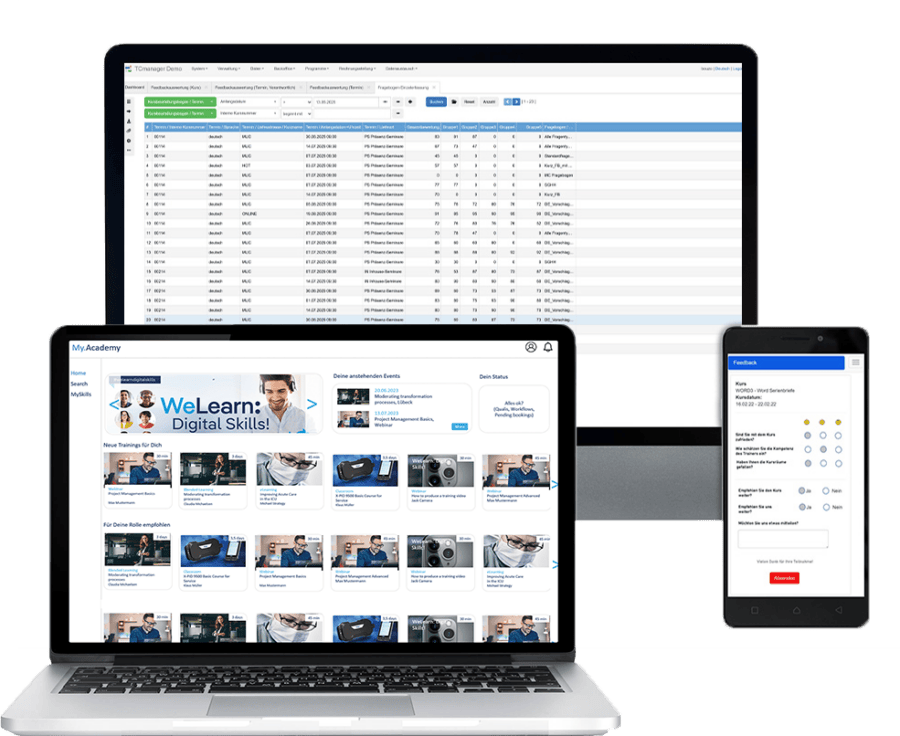
Get More Information for Free Now
Ready to Take Advantage of Data Lakes in Corporate Learning?
In just 30 minutes, learn how to use TCmanager® to manage complex and diverse data sources efficiently and cost-effectively.
✓
Over 25 Years of Expertise
✓
Made in Germany
Frequently Asked Questions
