


Skills for the AI Era
Skill Mapping for AI Transformation
From Skill Management to Strategic Workforce Transformation
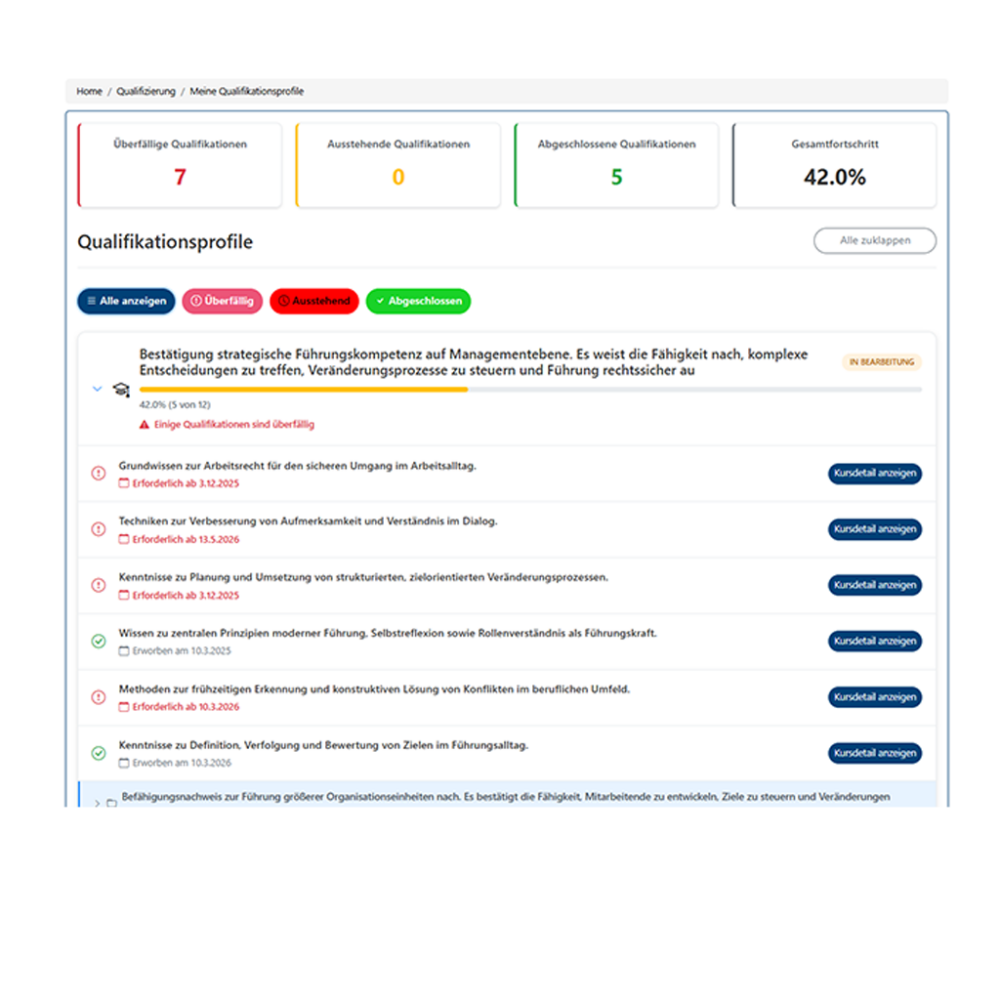
Identify early on which AI skills are missing in your company—and use that insight to develop targeted learning paths for upskilling, reskilling, and workforce planning. With SoftDeCC, you can combine competency management, qualification management, and learning paths into a single, centralized solution.
Securing a Skilled Workforce
Audit Security
A Topic for the Future

Definition
What Is Skill Mapping for AI Transformation?
Skill mapping for AI transformation describes the structured process of identifying existing and required AI competencies across roles, teams, and organizations. This enables companies to identify skill gaps early on, prioritize areas for development, and derive targeted measures for upskilling, reskilling, and workforce planning.
Typical areas of application: upskilling and reskilling, workforce planning, learning and development, competency management, leadership development, implementation of AI tools, organizational and site transformation, AI readiness programs...
Relevance for the AI Era
Why Skill Mapping Is Crucial Right Now
AI is changing tasks, roles, and skill requirements faster than traditional training cycles. Many companies are already investing in AI tools but lack sufficient visibility into existing skills and development needs.
Typical challenges:
✓
Lack of Transparency Regarding AI Skills
✓
Individual training sessions without a strategic focus
✓
Unclear role descriptions and skill requirements
✓
The Challenge of Prioritizing Continuing Education Programs
✓
Lack of a Foundation for Workforce Planning
✓
Significant manual effort in qualification management
Skill mapping creates a solid foundation for strategic competency development and a well-planned AI transformation.

Actual Training Needs in Companies
What AI Skills Do Companies Need Today?
Basic Understanding of AI
An understanding of AI use cases, opportunities, risks, and potential applications in everyday work.
Data Literacy
Secure Data Handling, Data Quality, and Data-Driven Decision-Making.
Prompting and AI Tool Usage
Effective use of generative AI tools for research, communication, analysis, and process support.
Governance and Compliance
Knowledge of data protection, AI governance, regulatory requirements, and the responsible use of AI.
Process and Transformation Expertise
Ability to rethink work processes using AI and to actively support change initiatives.
Leadership Skills
Team Management and Competency Development in AI-Supported Work Environments.
What does a competency matrix look like?
Example of a Competency Matrix
How to read the competency matrix: Each row represents a role, not an individual person. In the example, there are four different roles (manager, HR business partner, functional department, production) listed side by side—so the matrix compares across roles to identify where competency needs exist within the company.
For each role, the matrix shows: the most important target competency for AI transformation, the current competency level (low/medium/high), and the resulting development action.

How Skill Mapping Supports Workforce Planning
Skill mapping helps companies identify future skill needs early on and plan strategically.
This enables companies to:
• identify critical skill gaps
• develop new role profiles
• strategically manage reskilling
• improve succession planning
• reduce transformation risks
This creates a solid foundation for workforce transformation and long-term skill development.
Skill and Qualification Management
How SoftDeCC Uses AI to Implement Skill Mapping


Conclusion
Tackling AI Transformation
The AI transformation doesn’t start with technology, but with the right skills. Skill mapping provides transparency into existing skills, identifies critical skill gaps, and links skill development directly to specific learning initiatives. Those who know where the skill gaps lie can steer upskilling and reskilling in a targeted manner—rather than investing indiscriminately.
No-obligation consultation appointment
Highlighting and Targeted Development of AI Skills
Gain insight into existing skills, prioritize areas for development, and strategically manage upskilling and reskilling.
✓
Over 25 Years of Expertise
✓
Made in Germany
Frequently Asked Questions
